
- Company overview The heart of SMC Vision & Philsophy Partnership Certifications Company culture
- Our service Design and Engineering Maintenance and Service Examine Production Line Upgrade and Transformation Storage and Logistics Processing, Trading and Distributor
- Management Our history Global responsibility Info Center
- Procurement center Internship
- Construction & Real Estate
- General Mechanical Equipment Refrigeration Equipment Metal & Metallurgy Machinery Other Equipments Compressor
- Safety Roadway Safety Personal Protective Equipment
- Mechanical Basic Parts Bearing Spare Parts
- Hardware Tools
- Instrumentation Testing and Analysis Instruments Other Instrumentations
- Electrical & Electronics
- Construction Machinery Lifting Machinery Earth Moving machinery Road Construction Machinery Drilling Machinery Logistics Machinery Generator Set & Engine Other Machinery
- Rubber & Plastics Plastic Pipes and Pipe Fittings Fiberglass Reinforced Plastic Pontoon System PCTFE Product Polymer Material
- Industrial Gas Container
- Hotel Equipment & Supplies
- Daily Necessities Fabric Products Glasswork Pet Supplies
- Environmental Protection Machinery
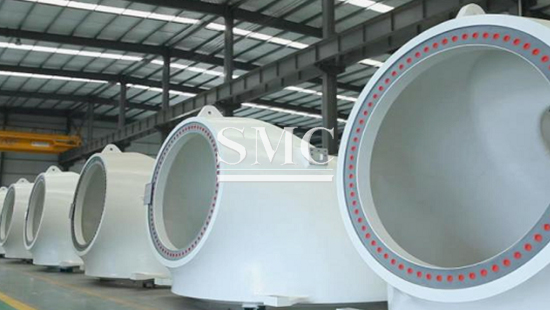
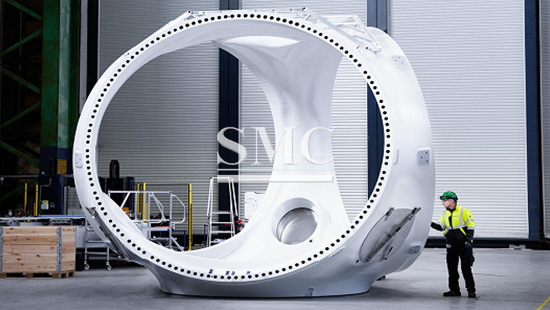
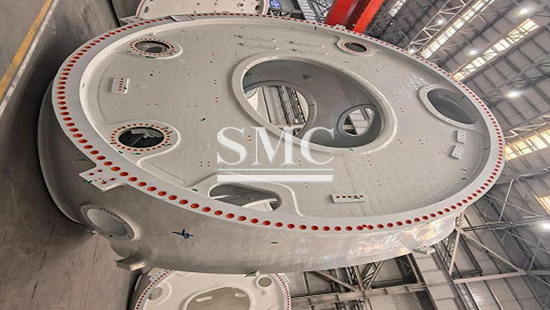
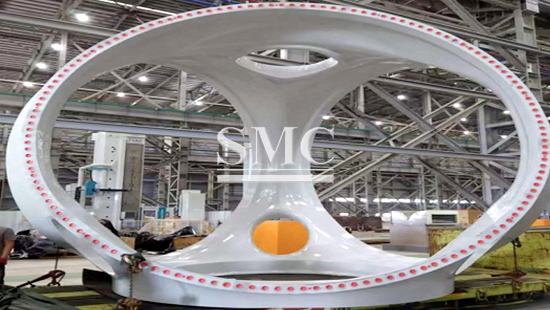
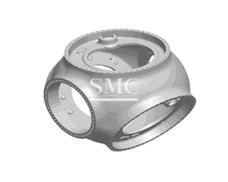
Wind Turbine Hub




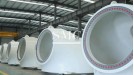
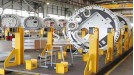

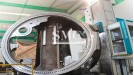
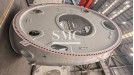
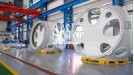
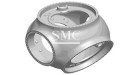
Material: Ductile Iron GG25/GG30/GJS-400-15
Application: Wind Turbine Rotor Hub
Surface Treatment: Sandblasted / Painted
Certification: ISO 9001 / CE
Shanghai Mac Corporation is a leading Wind Turbine Hub manufacturer and supplier.
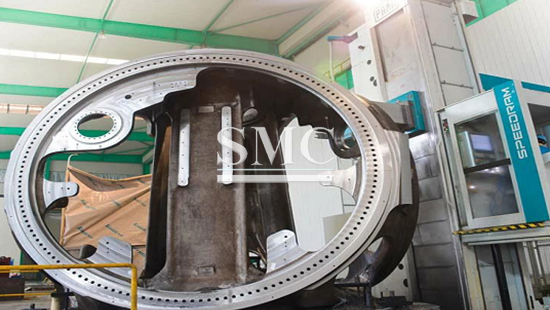
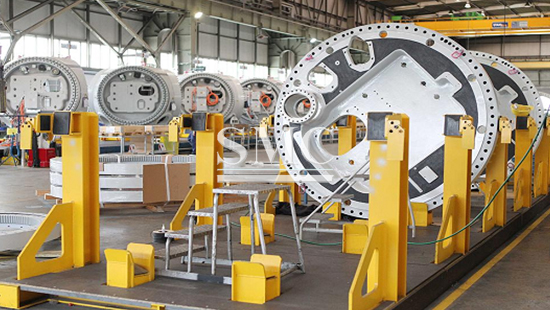
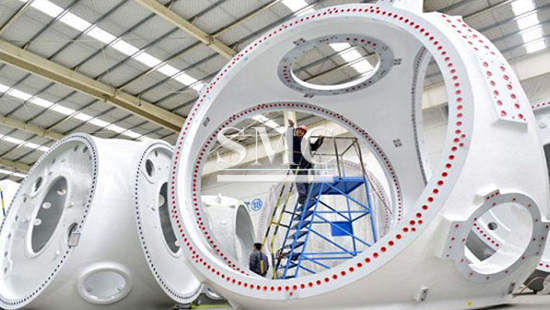
The Wind Turbine Hub is a critical mechanical component that connects the rotor blades to the main shaft of a wind turbine. It is installed at the root of the blades and fastened via high-strength bolts, serving as the primary interface for transferring aerodynamic wind loads to the drivetrain. This component is engineered to withstand complex cyclic stresses, including bending moments, torsional forces, and extreme centrifugal loads generated during operation. By ensuring a robust and reliable connection between the blades and the main shaft, the hub maintains structural integrity and operational stability under harsh environmental conditions, directly contributing to the long-term reliability and service life of the wind power generation system.
If you want to know more about our Wind Turbine Parts products or price, please feel free to contact us, we will reply you within 24 hours.

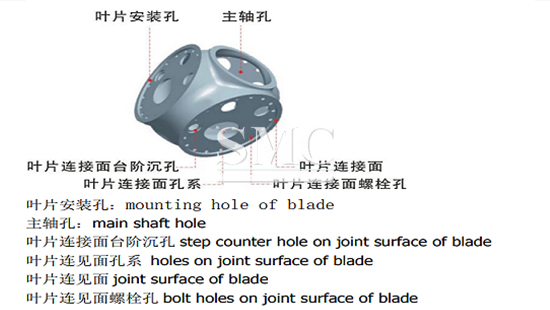
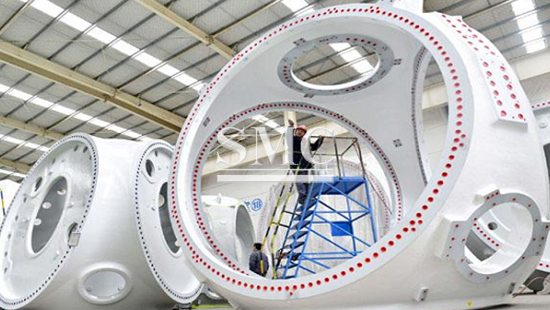









Technical Information of Wind Turbine Hub:
|
Wind Turbine Hub - Technical Parameters |
||
|
Parameter |
Specification |
Notes |
|
Material Grade |
GG25 / GG30 / GJS-400-15 |
GG25: general purpose; GG30: higher strength; GJS-400-15: ductile iron for high load |
|
Tensile Strength |
>=250 MPa (GG25) / >=300 MPa (GG30) / >=400 MPa (GJS-400-15) |
Tested per EN 10204 Type 3.1 |
|
Yield Strength |
>=150 MPa (GG25) / >=200 MPa (GG30) / >=250 MPa (GJS-400-15) |
At 0.2% offset |
|
Elongation |
>=10% (GG25) / >=7% (GG30) / >=15% (GJS-400-15) |
Measured over gauge length |
|
Hardness |
170-220 HB (GG25) / 180-240 HB (GG30) / 170-220 HB (GJS-400-15) |
Brinell hardness test |
|
Max. Rotor Diameter |
Up to 170m (for 5MW class) |
Custom sizes available |
|
Hub Diameter |
Customizable (150mm - 1200mm) |
Depends on turbine platform |
|
Blade Number |
3 blades (standard) |
Other configurations available |
|
Bearing Type |
Slewing bearing / Pitch bearing |
Compatible with SKF, FAG, Schaeffler |
|
Surface Treatment |
Sandblasted / Hot-dip Galvanized / Epoxy Painted |
C5-M coating for offshore |
|
Certification |
ISO 9001, ISO 14001, CE, GL |
Third-party inspection available |
Package Of Wind Turbine Hub
Standard Packaging
Each wind turbine hub is thoroughly cleaned and coated with VCI (Volatile Corrosion Inhibitor) anti-rust film to prevent oxidation during storage and transit. The hub is then secured on a custom-built wooden cradle with adjustable clamps to prevent movement during transportation. Wooden cradles are designed to match the hub's center of gravity and lifting points, ensuring safe handling by crane or forklift. For larger hubs (>2 tons), steel strap reinforcement is applied at stress points.
Shipping
We support FCL (Full Container Load) and LCL (Less than Container Load) sea freight, as well as break-bulk shipping for oversized hubs that exceed container dimensions. Air freight is available for sample hubs or emergency replacement parts. Available trade terms include EXW, FOB, CIF, CFR, DAP, and other Incoterms upon customer request. Shipping costs are calculated based on cargo dimensions (L×W×H), gross weight, destination port, and selected transportation method. For oversized shipments, we provide route survey and escort vehicle arrangements.
Lead Time
Sample hub (standard specification): 30-45 working days
Standard order (existing design): 45-60 working days
Customized order (new design requiring new patterns): 60-90 working days


Q1: What materials are used for wind turbine hubs and how do I choose the right one?
A1: Wind turbine hubs are primarily made from ductile iron (GG25/GG30/GJS-400-15) or cast steel. GG25 offers good castability and moderate strength for smaller turbines (≤1.5MW). GG30 provides higher strength for medium-sized turbines (1.5-3MW). GJS-400-15 ductile iron offers the best combination of strength and elongation for large turbines (≥3MW) subjected to high cyclic loads. For offshore applications, we recommend GG30 with enhanced corrosion protection. Material selection depends on turbine power rating, operating environment, and blade configuration (fixed vs. variable pitch).
Q2: What is the typical lead time for a wind turbine hub order?
A2: For standard hub designs with existing patterns, production lead time is 45-60 working days from order confirmation. Sample hubs requiring new pattern creation take 60-90 working days. Expedited production may be available for replacement parts at an additional cost. Shipping time depends on destination: domestic delivery 5-7 days, sea freight to Southeast Asia 15-20 days, to Europe 25-35 days, to North America 30-40 days.
Q3: What quality certifications do your wind turbine hubs carry?
A3: Our manufacturing facility holds ISO 9001:2015 (quality management), ISO 14001:2015 (environmental management), and ISO 45001:2018 (occupational health and safety) certifications. Each hub comes with a mill certificate (EN 10204 Type 3.1) documenting chemical composition and mechanical properties. We can arrange third-party inspection by GL (Germanischer Lloyd), DNV, or SGS upon request. NDT testing (MT/PT/UT) is performed on critical areas per customer requirements.
Q4: Can you produce hubs for non-standard wind turbine platforms?
A4: Yes, we offer full custom engineering services. Please provide your turbine platform specifications including: rotor diameter, blade count and attachment method, main shaft diameter and bearing type, power rating, and operating environment. Our engineering team will review feasibility, create 3D models for approval, and produce prototypes for validation testing before full production.
Q5: What is the difference between fixed-pitch and variable-pitch hubs?
A5: Fixed-pitch hubs have blades permanently attached at a fixed angle, resulting in simpler construction, lower weight, and reduced maintenance needs. They are suitable for small-to-medium turbines where operational simplicity is prioritized. Variable-pitch hubs incorporate internal oil passages and bearing seats for pitch adjustment mechanisms, allowing blade angle optimization across different wind speeds for improved efficiency and load management. Variable-pitch hubs are heavier and more complex but deliver 5-15% higher annual energy production, making them preferred for large commercial wind farms.
Q6: What inspection and testing procedures are performed on each hub?
A6: Every hub undergoes comprehensive quality control: (1) Dimensional inspection using CMM (Coordinate Measuring Machine) verifying all critical dimensions against engineering drawings; (2) Surface inspection via visual examination and dye penetrant testing (PT) on machined surfaces; (3) Internal quality verification through ultrasonic testing (UT) on load-bearing sections; (4) Dynamic balancing correction to ISO 1940 G2.5 standard; (5) Coating thickness measurement ensuring minimum specification compliance; (6) Photographic documentation of final product condition before packaging.
here
for
price